Abandoned London: Moorgate Underground Station

Another Hidden London tour- this time to Moorgate Underground Station titled Moorgate: Metropolitan Maze.
Moorgate opened just a couple of years after the Metropolitan Railway, the world’s first underground railway- Moorgate was a much needed extension to the line into the financial district of London. Over the years further lines have been added, the most recent addition is the Elizabeth Line which expanded Moorgate into Liverpool Street Station.
History
The station opened as Moorgate Street Station on 23rd December 1865, as a terminus for the first extension on the Metropolitan Railway line. Over the years the station has gone through many changes with extensions and the widening of tunnels.
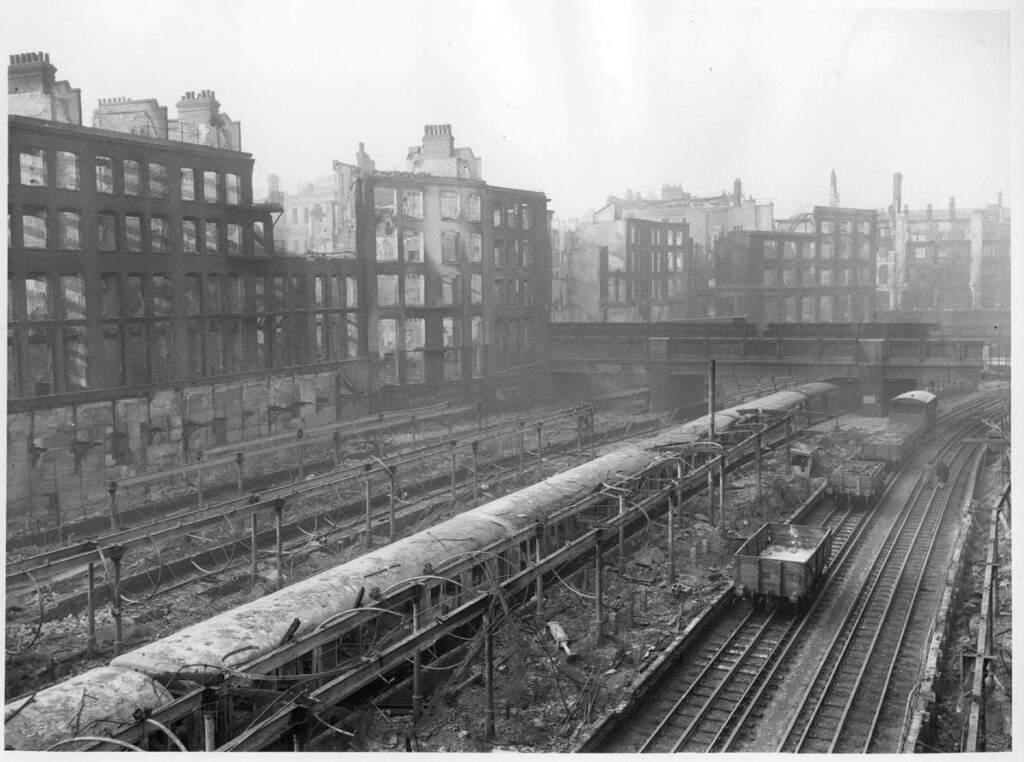
At the outbreak of WWII, alongside many other stations, floodgates were installed at Moorgate to protect the underground system from flooding in the event of a bomb exploding in the River Thames. On the night of the 29th December 1940, during the Blitz, Moorgate was extensively bombed. The station building, substation and relay room were badly damaged by fire. The station’s reconstruction after the war was a large and complex project and it wasn’t finished until the 1970s.
The worst peacetime accident to occur on the London Underground happened at Moorgate. On the morning of the 28th February a train from Finsbury Park carrying approximately 300 passengers failed to stop at the terminal platform. This resulted in the train hitting the tunnel end wall at around 35 mph. 43 people were killed and 74 injured. An inquiry after the accident found that there was no technical faults with the train and the accident was down to human error. After the fatal crash, the London Underground introduced a new safety system which automatically stops a train when it is travelling too fast towards a barrier. These safety measures are not only installed on the London Underground, but all over the world.
Explore
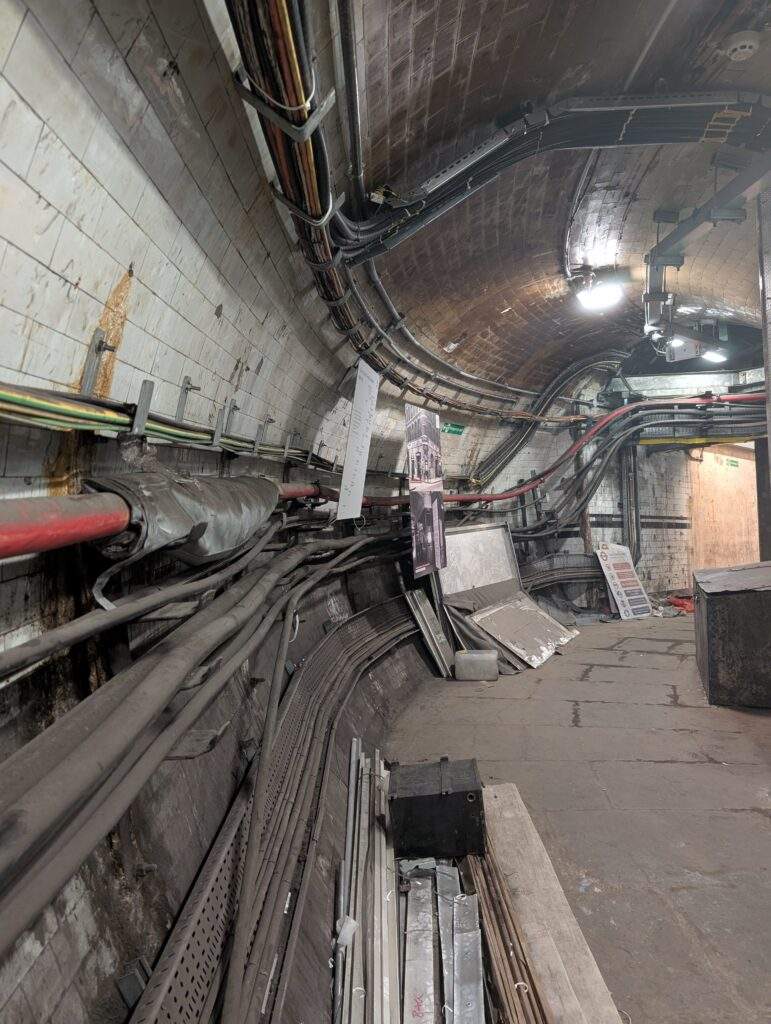
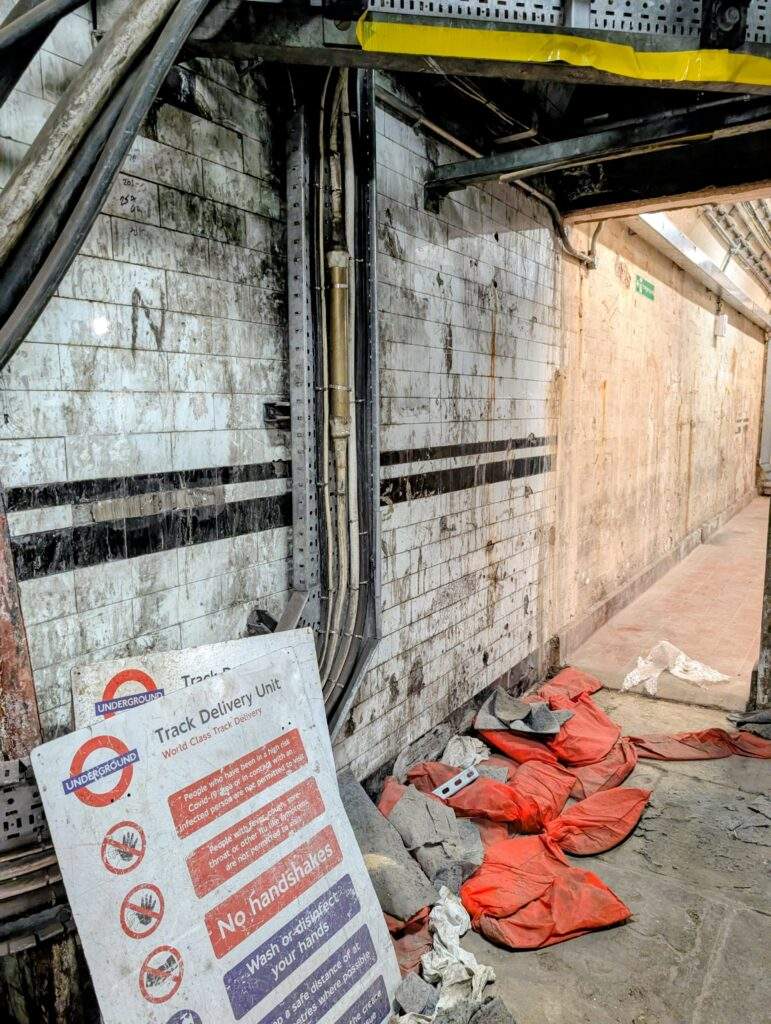
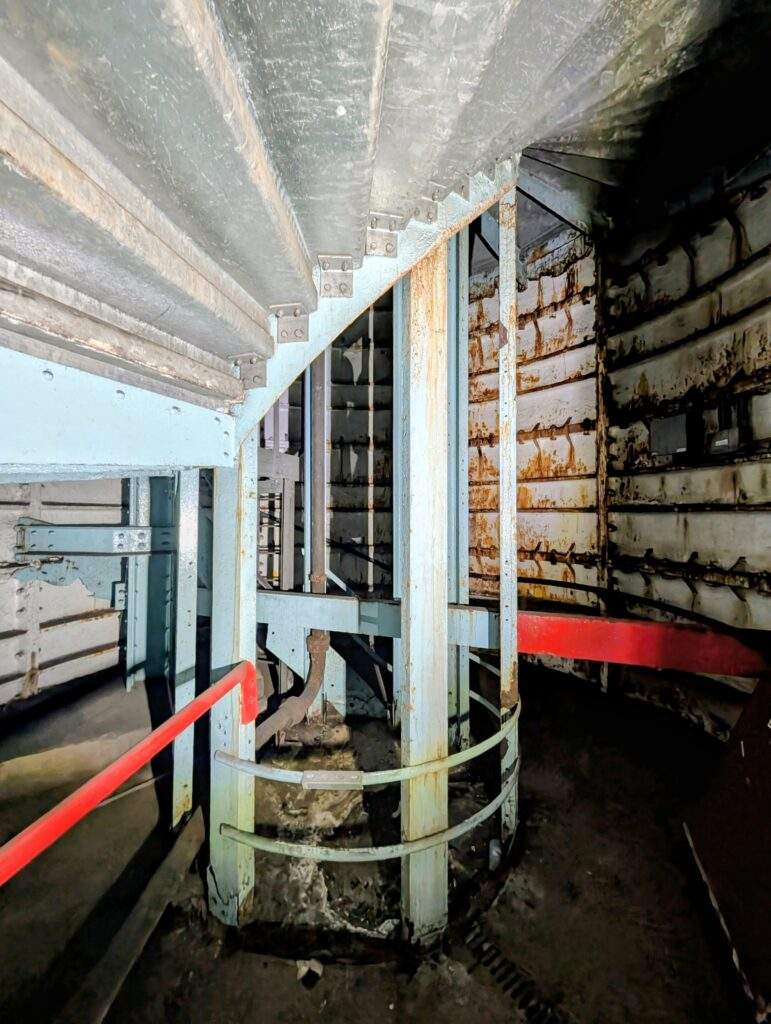
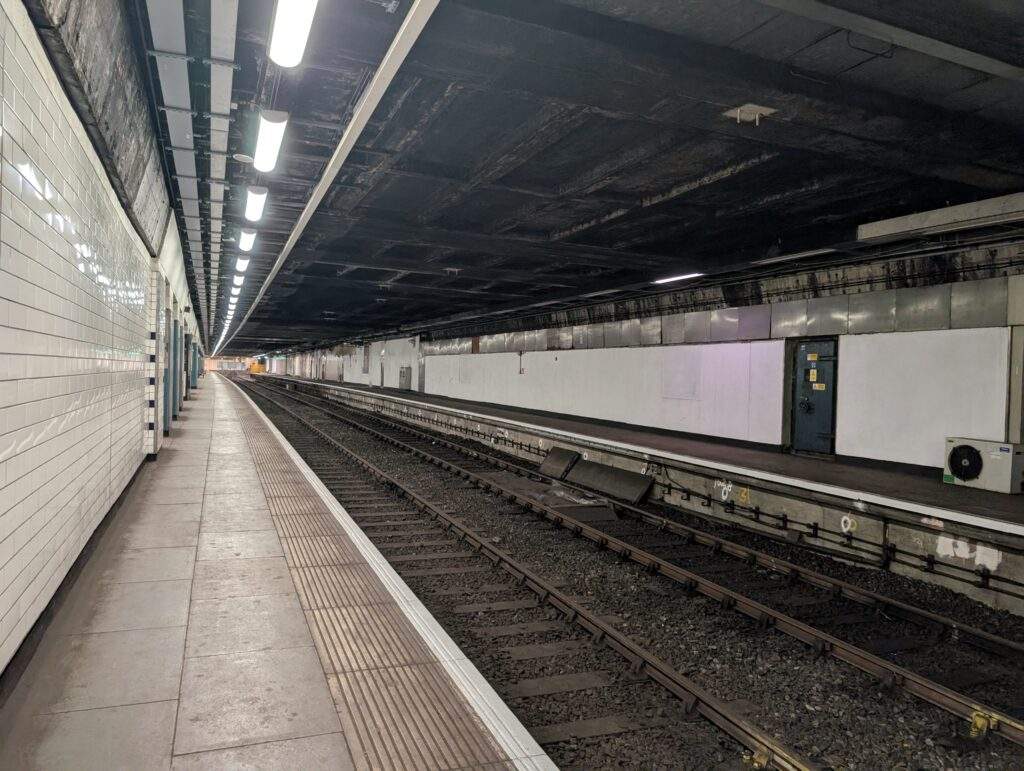
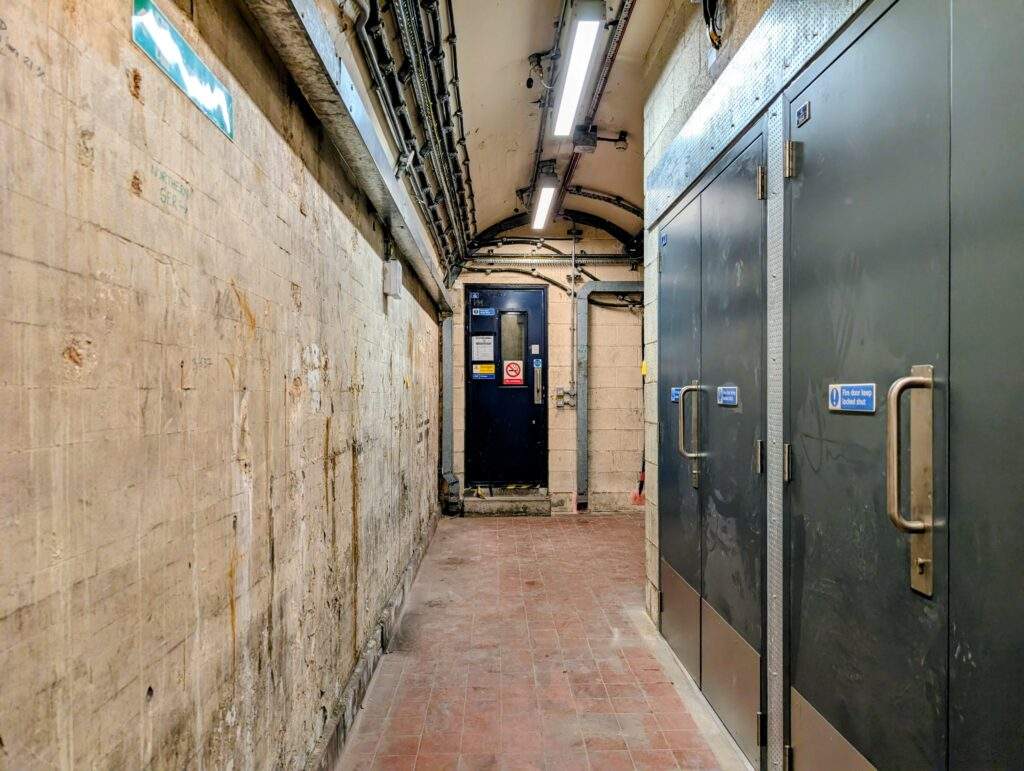
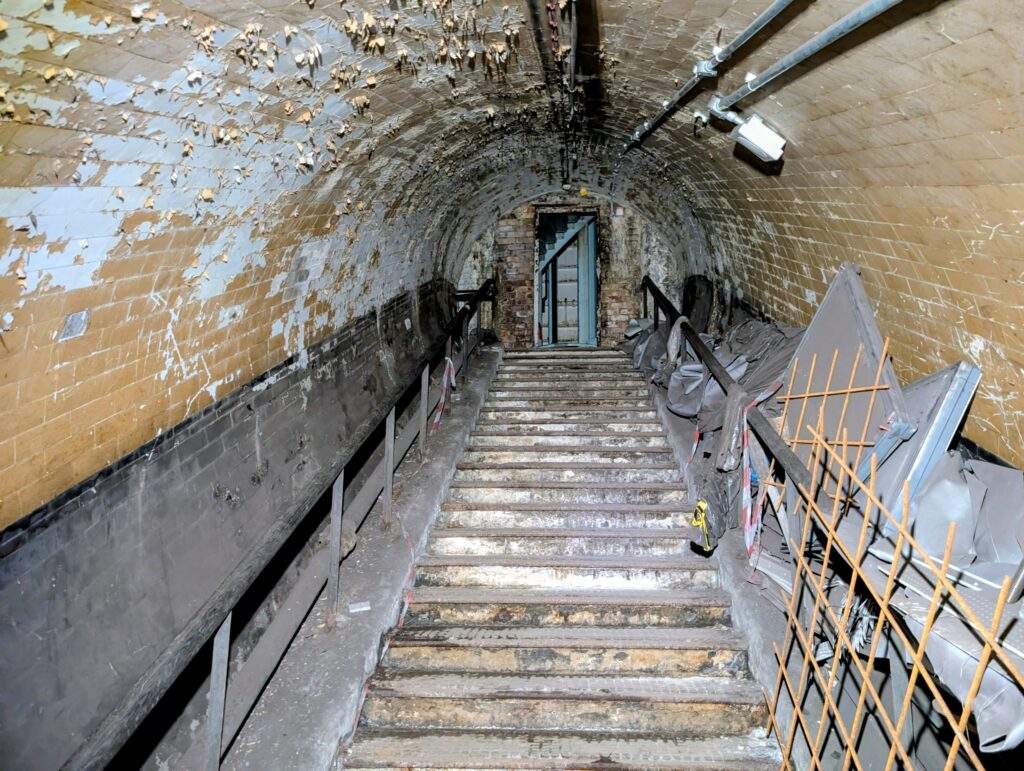
The tour lasted around 80 minutes and we started the tour amongst ordinary passengers and learnt the earliest history of the station before we headed down some stairs to the deep-level abandoned corridors. We saw the remains of two lifts that have been removed but the lift shafts remain. Escalators were installed in the 1930s to keep up with passenger numbers. Left behind from this time was the remains of when this space was used for sleeping during WW2 along with old signage. We then were allowed up an old set of stairs which once lead to the emergency spiral staircase for the City and South London railway. We went up these stairs that today didn’t lead anywhere and back down again. The main feature of these was to see the early anti-slip prevention that was installed and we had not seen anything like it on the underground. On top of the stairs were small wooden blocks that has been imported from Australian wood and wood hopefully stop anyone slipping down the stairs when wet.
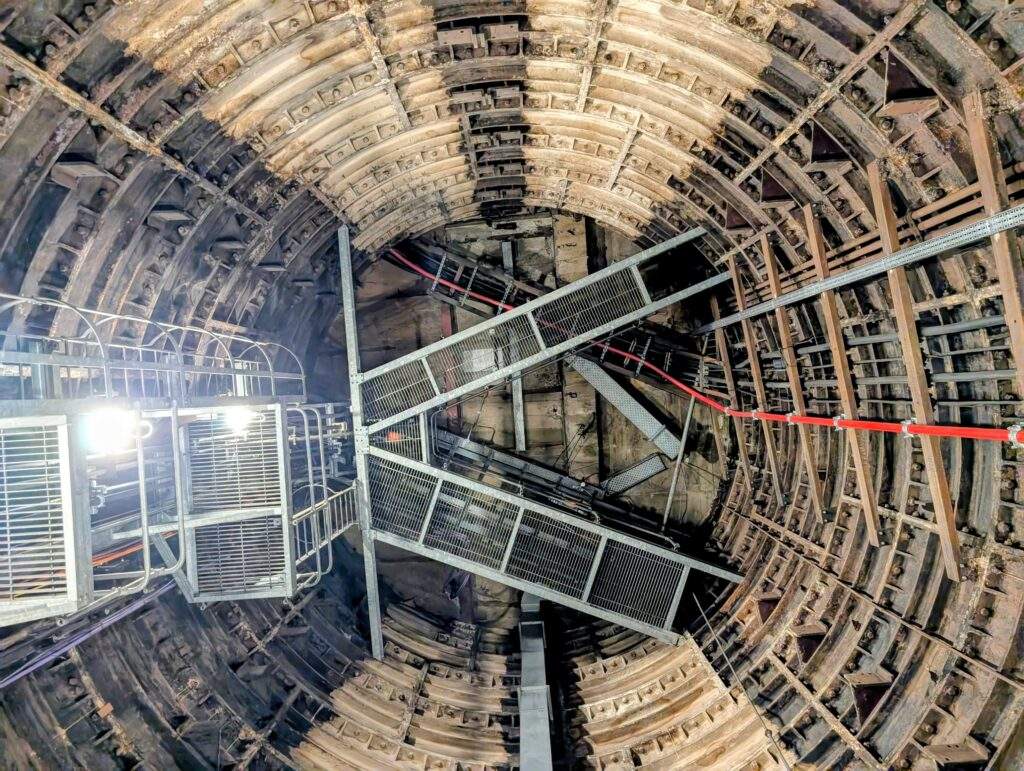
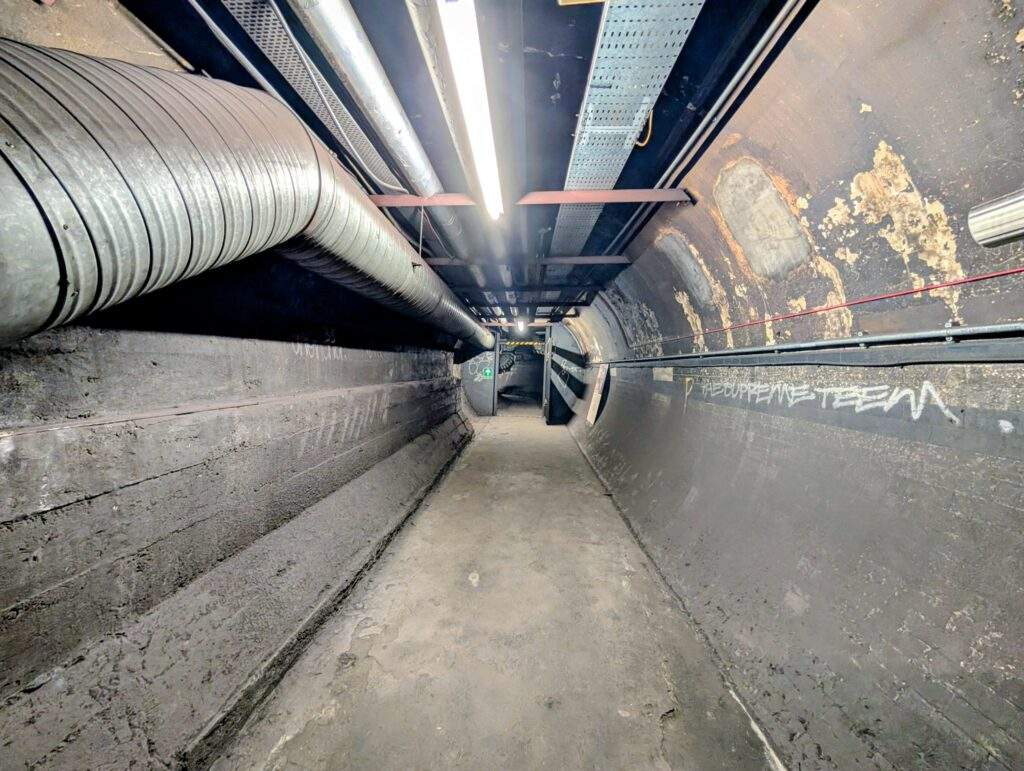
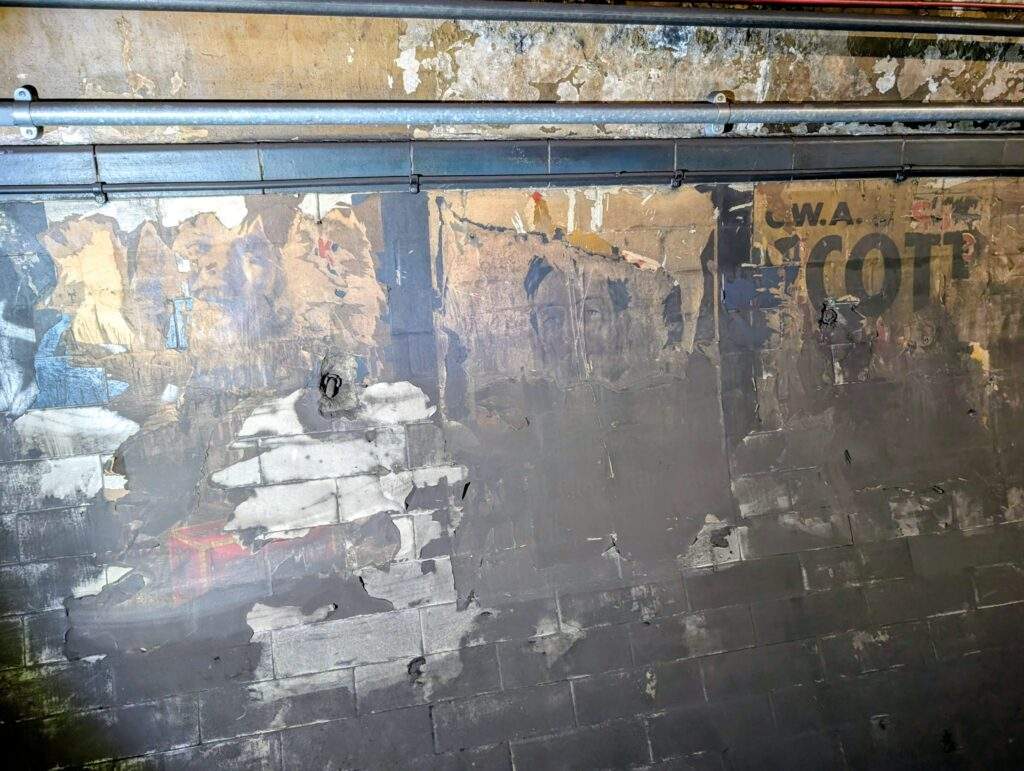
The corridors were lined with beautiful Victorian glass tiles which were truly a wonderful detail that could easily have been missed if not pointed out to us. The whole of the tunnel including the ceiling was tiled in these glass tiles, which is really unusual in fear of these tiles dropping down. Then we were shown the remains of 1930s poster advertising that adorned the walls. You could make out the figures on the posters alongside some writing. The advert for Lifebuoy was recognisable with its red branding and a company that is still going strong today. These posters cannot be restored and so over time will disintegrate but are great to see whilst they are still there.
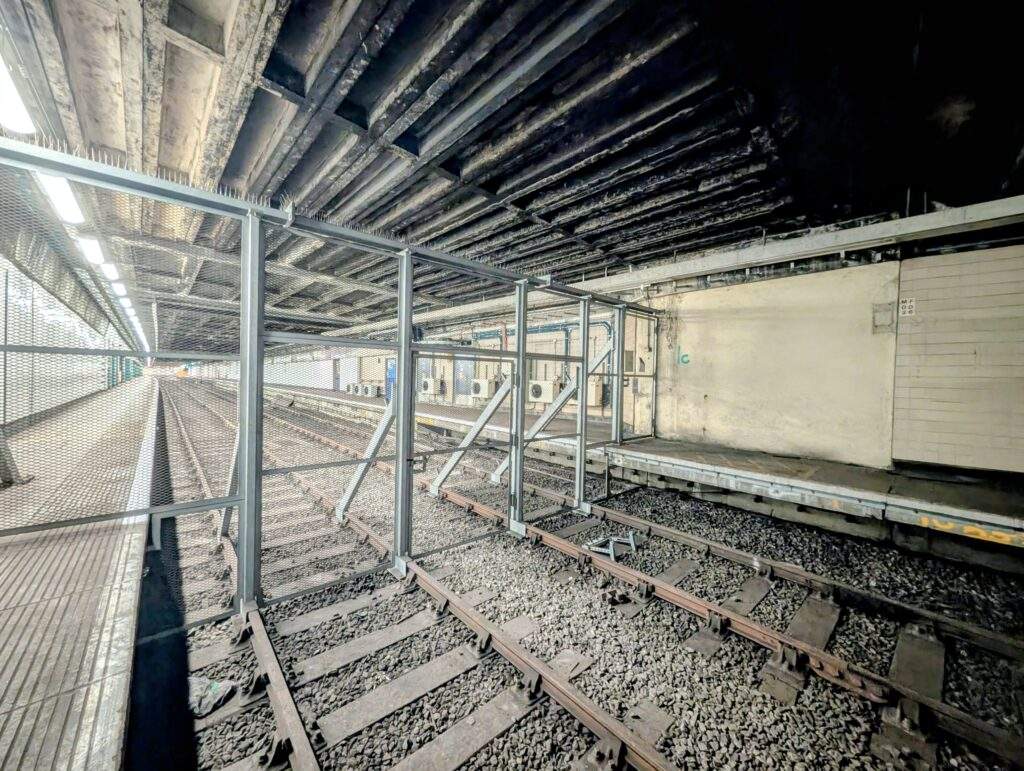
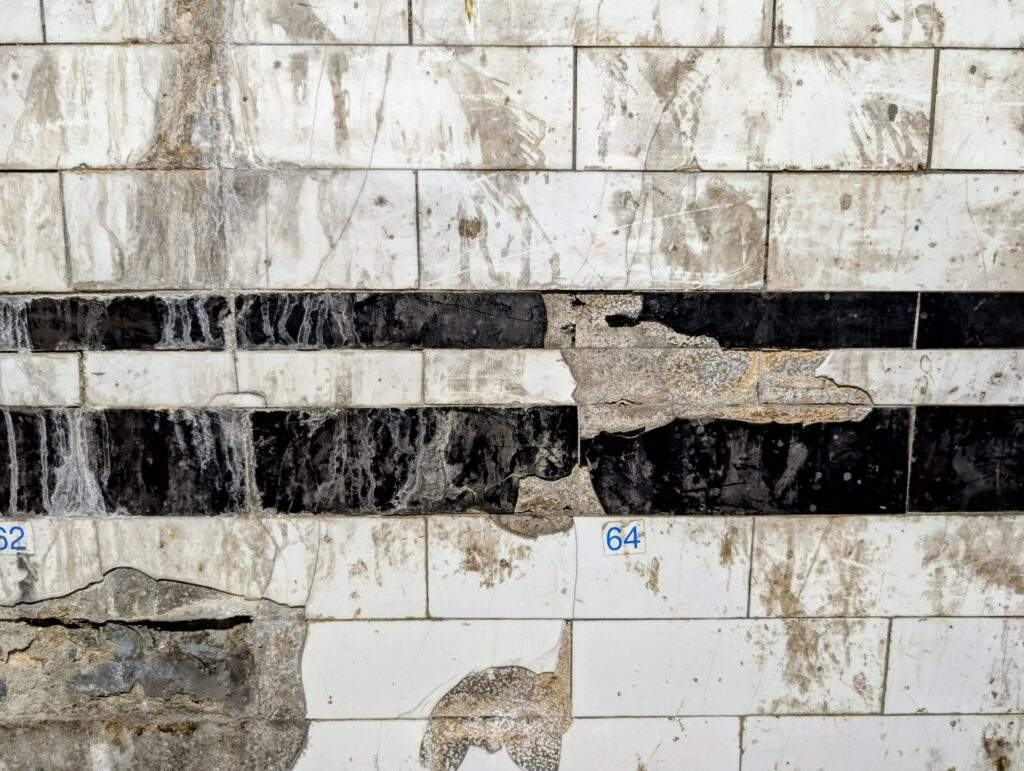
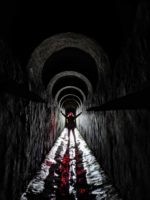
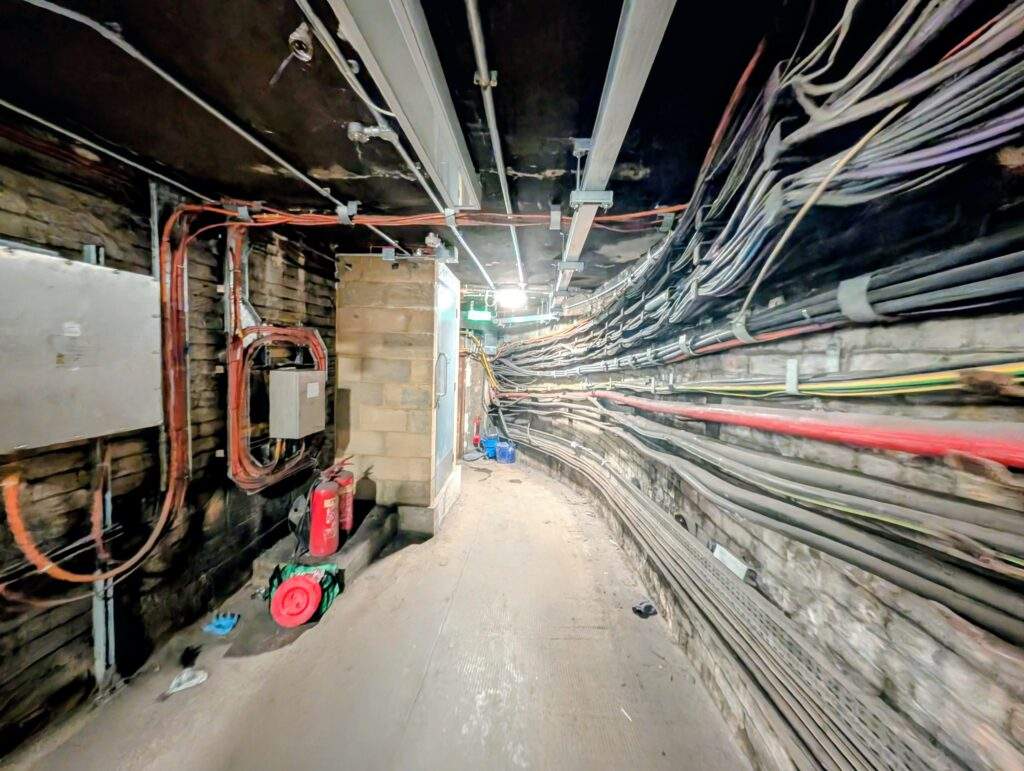
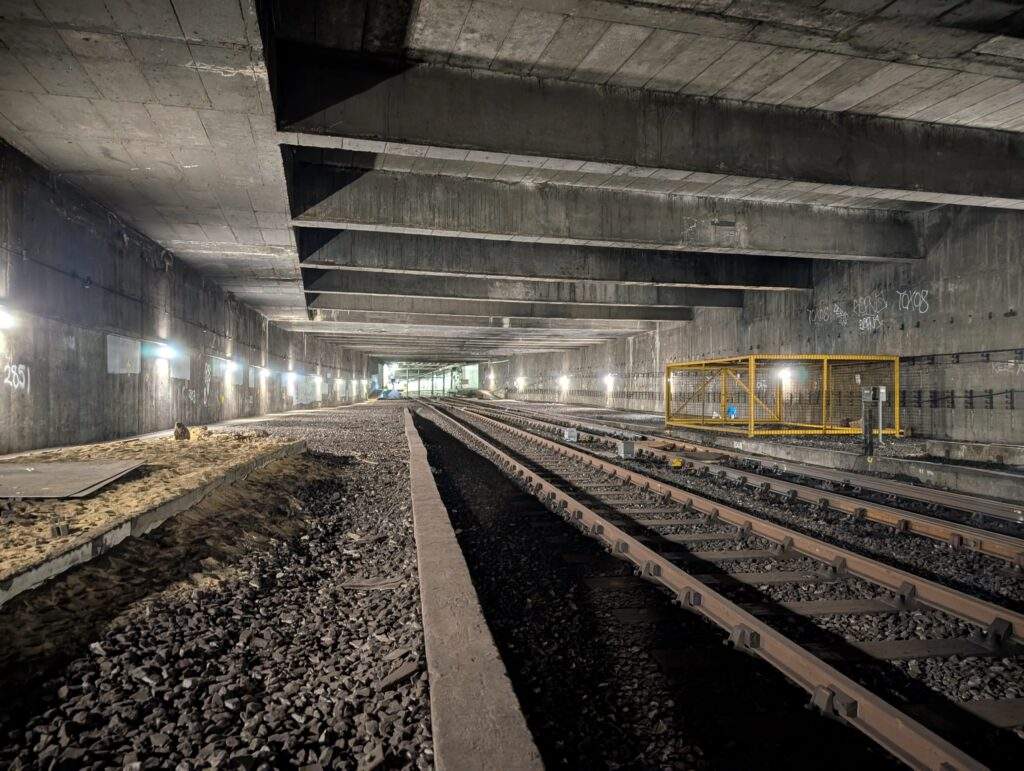
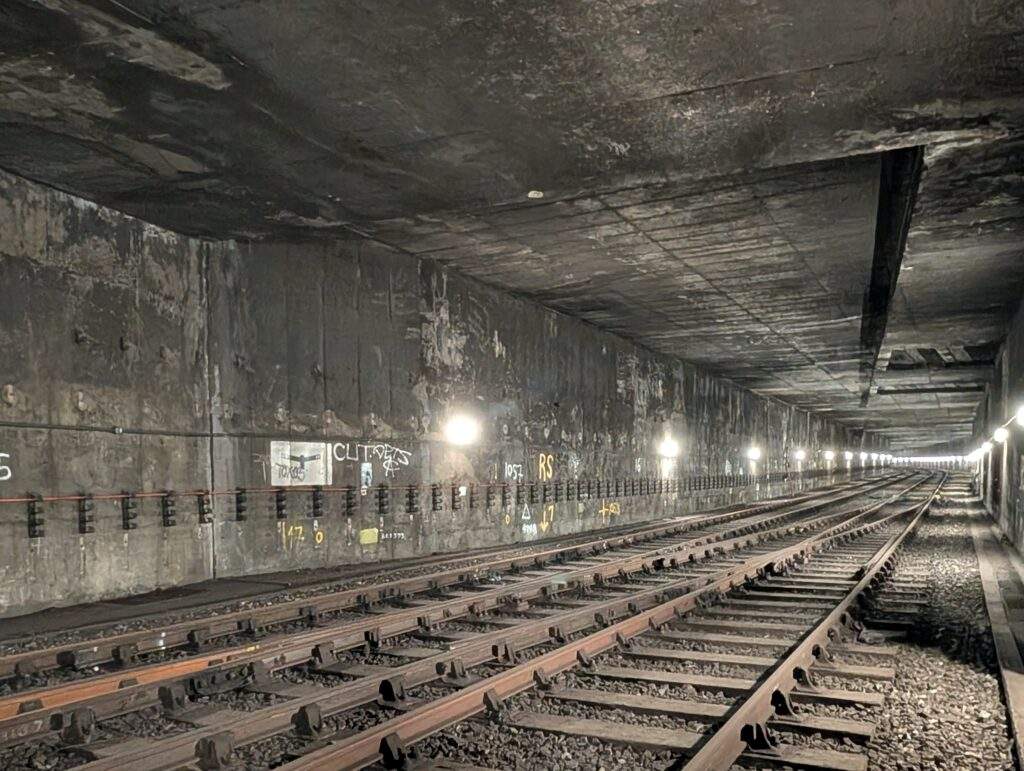
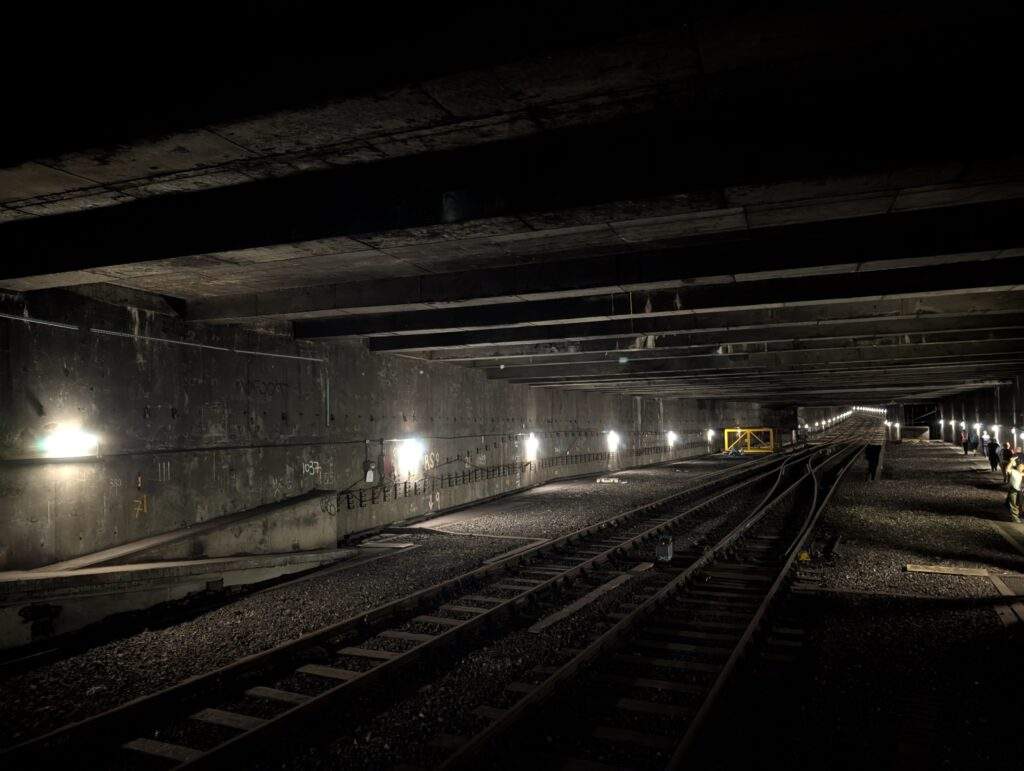
Next we headed along a disused track and past locked metal gates and headed towards the “catacombs”. This was a space directly under the Barbican that had previously been accessed by Urban explorers and tagged but it appears that this has not happened in recent years. It’s not everyday that you can walk along disused underground tracks at a working station with tubes carrying passengers going past just a few meters away. We finished the tour straddling the old section of the station and the new Elizabeth line, a wonderful 80 minutes well spent!
Last Updated on 21 December 2025 by Michael